

Private Investigator for Personal Injury Case in Florida
Last Updated: October 22, 2026
Quick Summary
Hire a Florida-licensed private investigator who specializes in accident and surveillance work, verify that license through the state, and confirm the investigator coordinates with your attorney from day one. A personal injury investigator documents the scene, vehicles, witnesses, and claimant activity so your case is not one-sided.
Confirm the individual investigator's license number and class through the Florida Department of Agriculture and Consumer Services lookup.
Ask who the client is and require a conflict check against the insurer and defense side.
Surveillance documents observable public activity but rarely proves fraud on its own.
Retainers range from $500 for records checks to $3,400 for complex crash investigation support.
Never let anyone edit or clean up surveillance footage before your attorney reviews it.
Table of Contents
Why a Personal Injury Investigator Matters for Your Florida Case
Florida Private Investigator License Lookup: Verify Before You Hire
Private Investigator Questions to Ask Before Hiring
Personal Injury Surveillance Investigation: What It Covers
Private Investigator Cost for a Personal Injury Case in Florida
Coordinating with Your Attorney: Evidence, Chain of Custody, and Admissibility
Ethical and Legal Limits of Surveillance in Florida
Conclusion
Frequently Asked Questions
Why a Personal Injury Investigator Matters for Your Florida Case
If you need a personal injury investigator for a personal injury case in Florida, the short answer is this: hire a Florida-licensed private investigator who specializes in accident and surveillance work, verify that license through the state, and confirm the investigator coordinates with your attorney from day one.
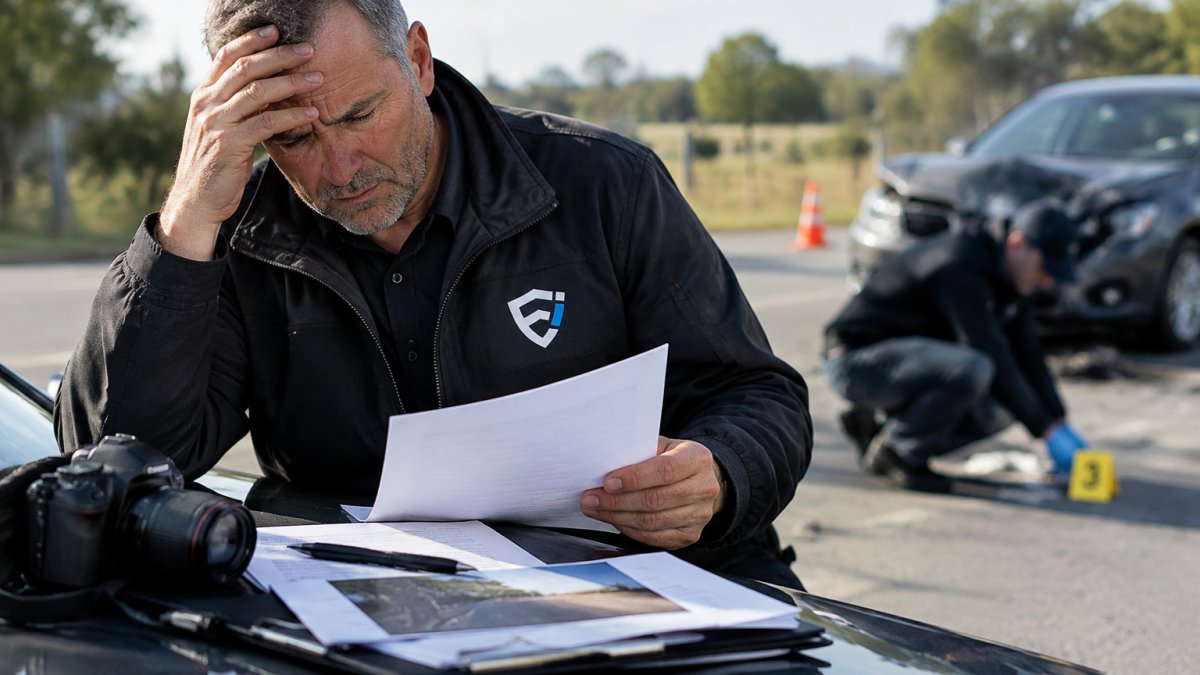
Here's the part most people get wrong. They assume any licensed investigator can help with a crash claim. Insurance carriers and defense firms routinely use surveillance and background work to challenge injury claims, so claimants who show up without independent evidence are arguing one-sided. A personal injury investigator levels that field by documenting what actually happened: the scene, the vehicles, the witnesses, and the claimant's activity.
Below, we'll show you exactly how to verify a license, what to ask, what surveillance can and cannot prove, and how costs work.
Florida Private Investigator License Lookup: Verify Before You Hire
Anyone offering investigative services in Florida must hold a valid state license, and you can confirm it in minutes. Florida regulates private investigators through the Department of Agriculture and Consumer Services, which maintains a public license lookup. Search the individual investigator and the agency name, then confirm the license status shows as current and the class matches the work you need.

A common mistake is checking only the agency name. Ask for the individual investigator's name and license number too, because the person doing the fieldwork is the one whose credentials matter in court. The Florida Department of Agriculture and Consumer Services licensing portal is the authoritative source, not a badge on a website.
Watch Out Hiring an unlicensed investigator can taint your evidence and expose you to legal risk. If the license lookup returns nothing, walk away regardless of how convincing the sales pitch sounds.
Private Investigator Questions to Ask Before Hiring
The best way to separate a real investigator from a sales operation is a short, direct interview. Ask these questions before you sign anything, and write down the answers so you can compare firms side by side:
Licensing and credentials
What is your individual license number and license class, and what is the agency's license number?
How many personal injury and surveillance cases have you personally worked in the last twelve months?
Do you have traffic crash, scene documentation, or reconstruction support experience?
Whom the investigator represents
In this engagement, who is your client, me, my attorney, or my law firm?
Have you ever worked for an insurance carrier or defense firm on a matter involving me or my family?
Will you sign a conflict check confirming you have no current or prior relationship with the insurer or defense side in this claim?
That fourth question matters more than most claimants realize. In injury cases, investigators are hired on both sides. Insurers and defense firms routinely retain investigators to document claimant activity, locate witnesses, and build background files. A claimant-side investigator should be clear that you or your attorney are the client, that the work product belongs to your side, and that the investigator will not share findings with the carrier. If an investigator is vague about whom they represent, treat that as a disqualifier.
Scope, deliverables, and engagement terms
What exactly is in scope, surveillance hours, scene documentation, witness canvassing, records checks, and what is explicitly out of scope?
What is your hourly rate, what does the retainer cover, and how do you bill travel, report writing, and court testimony?
What happens when the retainer runs out mid-investigation, do you stop, notify my attorney, or continue and invoice?
What are your cancellation and refund terms if my attorney decides to change strategy?
How do you document evidence, contemporaneous notes, original unedited files, timestamps, location logs, and how do you maintain chain of custody?
What does a final report look like, and will you provide a redacted sample?
What happens if the investigation turns up nothing useful, do you say so plainly, and what do you recommend at that point?
A useful pattern is to ask for a one-page scope of work before you pay anything. It should list the tasks, the estimated hours, the deliverables, the billing rate, the retainer amount, and the conditions under which the investigator will stop and check in with your attorney. Firms that resist putting scope in writing are usually the ones that generate surprise invoices.
Pro Tip Ask for a sample investigative report with client details redacted. The format of that report tells you immediately whether the evidence will be usable by your attorney or just a folder of timestamped photos. A report that pairs each photo or video clip with a date, time, location, and narrative note is far more useful in litigation than a highlight reel.
An investigator who talks fluently about case fit, scope, conflict checks, and deliverables is usually the one who has actually worked claims. One who dodges the license question, cannot explain whom they represent, or quotes a suspiciously low rate without a written scope is not.
Personal Injury Surveillance Investigation: What It Covers
A personal injury surveillance investigation is the discreet, lawful observation and documentation of activity relevant to an injury claim. In practice, it typically covers:
Surveillance of a claimant's residence, workplace, and reported activity from public vantage points
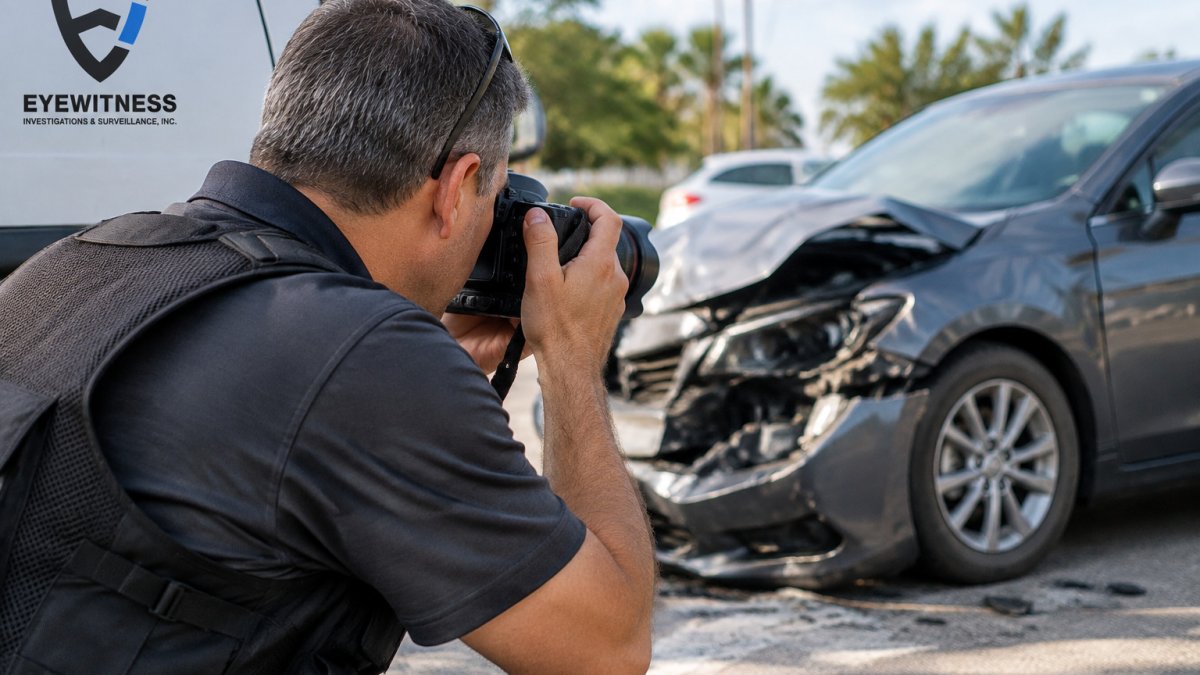
Scene documentation of the accident location, sight lines, road conditions, signage, and lighting
Witness location and recorded statements, with notes on demeanor and availability
Background investigation of parties, prior claims, and publicly available records
Video and photo capture in public spaces where there is no reasonable expectation of privacy
Who hires the investigator, and why it matters
In injury cases, investigators are retained on both sides. Insurers and defense firms use surveillance to test whether claimed limitations match observable activity. Claimants and their attorneys use investigators to document the scene, locate witnesses, preserve evidence before it disappears, and counter one-sided narratives.
How lawful public observation actually works
Surveillance is not glamorous. It usually means parking on a public street or in a lawful public lot, observing from a distance, and recording only what is visible from public space.
How surveillance evidence fits an injury claim
Surveillance rarely proves fraud on its own, and a good investigator will say so up front. What it can do is document observable activity that bears on claimed limitations, for example, whether a person who claims inability to lift is shown lifting, or whether reported activity levels match what is observed in public.
Scene and witness work is often the higher-value piece
For many claimants, scene documentation and witness location matter more than surveillance. A retired law enforcement officer who spent years in traffic homicide work reads a crash scene differently than a generalist.
Key Takeaway Surveillance documents observable activity in public. It does not prove fraud on its own, and a good investigator will tell you that up front rather than overselling the footage. Ask how scene documentation, witness location, and a documented chain of custody fit into the overall scope before you approve a surveillance retainer.
Private Investigator Cost for a Personal Injury Case in Florida
Costs for a personal injury investigator in Florida are usually billed hourly or through a retainer, and the scope drives the total. A short background check costs far less than multi-day surveillance. At Eyewitness Investigations & Surveillance, we structure engagements around clear retainers so clients know the number before fieldwork starts:
Retainer | Typical Use |
$500 | Records checks, witness location, initial case analysis |
$1,000 | Short surveillance blocks and scene documentation |
$1,500 | Extended surveillance or combined investigation scope |
$2,000 | Multi-day surveillance with reporting |
$2,400 | Dedicated surveillance retainer |
$3,400 | Complex cases, crash investigation support, expert coordination |
Ask any investigator how they handle overages and mid-case scope changes. The firms that nickel-and-dime you with surprise invoices are the ones to avoid.
Coordinating with Your Attorney: Evidence, Chain of Custody, and Admissibility
Evidence is only worth what your attorney can use in court, so coordination matters as much as collection. Bring your attorney into the engagement before fieldwork begins. Your attorney can define the investigation scope, confirm what the case actually needs, and advise on privilege and disclosure issues that vary by situation.
Chain of custody is the other half. Every photo, video clip, and report should be logged with the date, time, location, and the investigator who captured it, then preserved without editing. An investigator who hands over raw, unedited files with a written log is giving your attorney something defensible. One who sends a highlight reel with no documentation is not.
Watch Out Never let anyone edit or "clean up" surveillance footage before your attorney reviews it. Altered media invites challenges to authenticity and can sink otherwise solid evidence.
Ethical and Legal Limits of Surveillance in Florida
Surveillance has hard limits, and a professional investigator respects them. Observation in public spaces, where there is no reasonable expectation of privacy, is generally lawful. Recording inside a private residence, trespassing on posted property, or using tracking devices without proper legal authority crosses the line.
Florida law also restricts certain recording and interception activities, and the specifics depend on the facts of your case. Your attorney should confirm what is permissible before any recording occurs. An investigator who promises to "get whatever it takes" is a liability, not an asset.
Pro Tip Ask your investigator to put their lawful-methods policy in writing. A firm that can articulate its limits clearly is usually the one whose evidence survives scrutiny.
Conclusion
The hardest part of a personal injury case is often proving what actually happened, and one-sided claims get challenged. If you need a private investigator for a personal injury case in Florida, hire a licensed, experienced firm that verifies credentials, coordinates with your attorney, and documents evidence properly. Eyewitness Investigations & Surveillance brings investigative experience since 1992, leadership by a retired law enforcement officer with 20 years of service, and specialized traffic homicide and crash investigation expertise across Florida. Book Now with our licensed team and get evidence you can actually use.
Frequently Asked Questions
How do I choose a private investigator for a personal injury case in Florida?
Start by verifying the investigator's Florida license through the Department of Agriculture and Consumer Services. Then ask about their experience with personal injury cases, their surveillance methods, and how they document evidence for court. Request a written estimate that details hourly rates and expenses. A good personal injury investigator will explain the process clearly, provide references, and coordinate with your attorney to ensure the evidence meets admissibility standards.
How much does a private investigator cost for a personal injury case?
Costs vary based on complexity and scope. Many investigators require a retainer. For example, The Eyewitness offers retainer packages starting at $500 and going up to $3,400, depending on the services needed. Surveillance retainers may be $2,400. Always ask for a detailed fee structure before hiring to avoid surprises.
Can surveillance footage be used as evidence in a personal injury case?
Yes, surveillance footage can be used as evidence if it is lawfully obtained and properly authenticated. In Florida, investigators must follow privacy laws and avoid trespassing or illegal recording. The footage should be timestamped, with a clear chain of custody, and the investigator may need to testify about how it was captured. Your attorney can help ensure the evidence is admissible in court.
Should I hire a private investigator or ask my attorney to find one?
Both approaches can work. Attorneys often have trusted investigators they work with regularly, which can streamline coordination. However, you may also hire an investigator directly, especially if you want more control over the process. If you hire directly, ensure the investigator has experience in personal injury cases and is willing to collaborate with your attorney. Communication between all parties is key to building a strong case.
Book Now
Comments