

How to Use Black Box Data in Fatal Crash Investigations
Last Updated: November 7, 2026
Quick Summary
Black box data in fatal crash investigations gives investigators a record of what a vehicle was doing in the seconds before impact, showing speed, braking, and seat belt use. It does not show who caused the crash, so we treat it as one piece of evidence, not the whole case.
Event data recorders capture speed, brake application, throttle, steering, seat belt status, airbag timing, and delta-V.
A car black box stores crash data until the next event overwrites it, so treat the data as temporary from the first hour.
Do not start, move, or tow the vehicle until the module is documented and secured.
Confirm legal authority before download, since downloading EDR data is a search in many contexts.
EDRs do not record fault, intent, right of way, or whether a driver was distracted or impaired.
Need black box data preserved fast?
We recover and document crash data for fatal crash cases with a clear chain of custody.
Table of Contents
What Black Box Data in Fatal Crash Investigations Actually Proves
Car Black Box Location: Where the EDR Sits and Why It Matters
How Long Does a Car Black Box Store Data Before It Overwrites
Preserving Vehicle Black Box Data After a Crash: A Step-by-Step Process
Reconstructing a Fatal Crash: Reading Speed, Braking, and Delta-V
What EDRs Do Not Record, and Why Corroboration Still Matters
What Black Box Data in Fatal Crash Investigations Actually Proves
Black box data in fatal crash investigations gives investigators a record of what a vehicle was doing in the seconds before impact. At Eyewitness Investigations & Surveillance, we treat that record as one piece of evidence, not the whole case. It shows speed, braking, and seat belt use. It does not show who caused the crash.
That distinction matters more than most people realize. A driver can be speeding and still not be at fault. A vehicle can brake hard and still strike a pedestrian who stepped out without warning.
The black box data answers "how did this happen." Fault and liability come from the full picture: scene evidence, witness statements, and the physical damage.
Below, we walk through what these systems record, where they sit, how long the data lasts, and how to preserve it before it disappears.
What Information Does a Car Black Box Record?
A car black box records a short snapshot of vehicle and driver inputs around the moment of a crash. The device is an event data recorder, or EDR.
Event data recorders typically capture a few key channels:
Vehicle speed in the seconds before impact
Brake application and when it started
Throttle position and accelerator input
Steering input in the final moments
Seat belt status for driver and front passenger
Airbag deployment timing and which bags fired
Delta-V, the change in velocity at impact
The data comes in short bursts.
One thing most guides miss: the EDR records what the driver did with the controls, not why. It cannot tell you if the driver was distracted, impaired, or asleep.
Car Black Box Location: Where the EDR Sits and Why It Matters
The location of an event data recorder varies by make and model.
Why does location matter? Because a fatal crash often damages that area. Fire, crushing, or fluid exposure can destroy the module before anyone downloads it.
A common mistake is assuming the box survives every collision. It does not. In severe crashes, the module may be cracked, water-damaged, or burned.
Knowing where the unit sits helps investigators plan the recovery. It also tells them what tools and care the job needs. Pulling the wrong trim panel or cutting the wrong wire can wipe the data or make the module unreadable.
How Long Does a Car Black Box Store Data Before It Overwrites
A car black box stores crash data until the next event overwrites it, and that can happen fast.
If the vehicle is driven again, a new trigger can push out the old record. In a fatal crash, the car usually does not move. But the risk is real in multi-vehicle scenes or when a damaged car gets towed and started again.
The practical takeaway: treat the data as temporary from the first hour. A delay of days or weeks can mean the record is gone.
Watch out: letting a salvage yard or tow operator start or move the vehicle before the module is secured can erase the only digital record of the crash.
Preserving Vehicle Black Box Data After a Crash: A Step-by-Step Process
Preserving vehicle black box data after a crash means securing the module and its data before anything else touches the vehicle.

The following steps outline the general order in which this process should occur:
Secure the scene and the vehicle. Do not start, move, or tow the car until the module is documented. In a fatal investigation, law enforcement typically holds the vehicle as evidence; confirm who has custody before anyone touches the EDR.
Identify the EDR and any related modules. Note the make, model, model year, and airbag control system. Some vehicles route crash data through a separate sensing and diagnostic module, and the wrong module means no data.
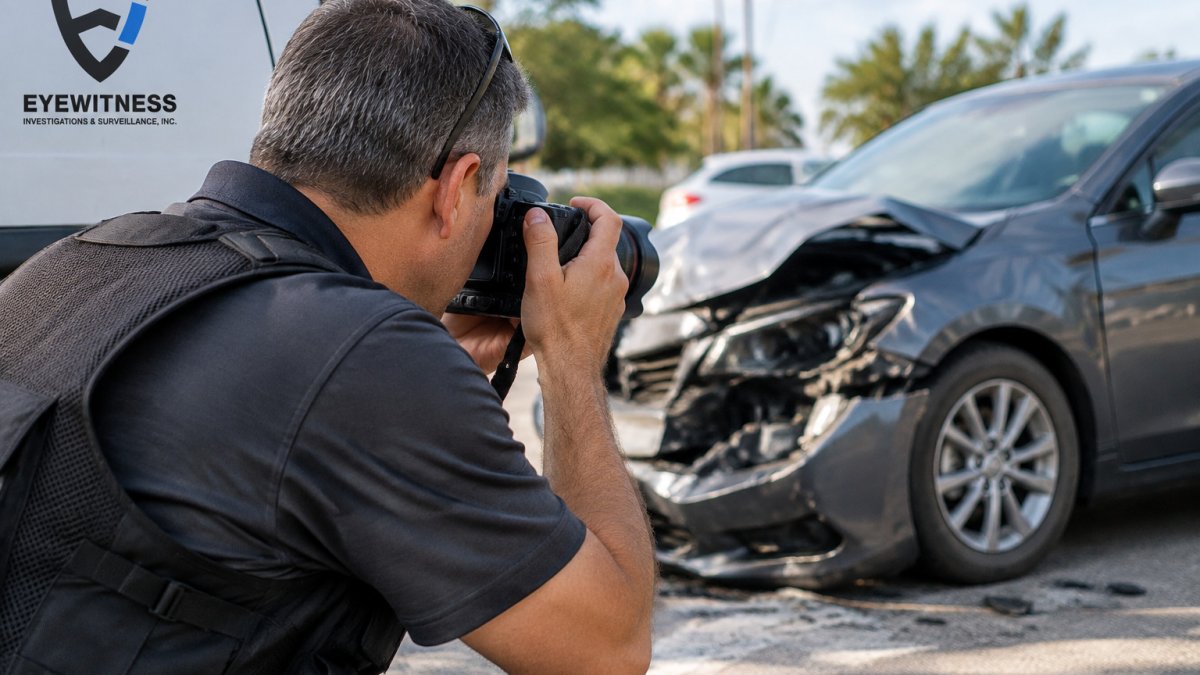
Document the module's condition in place. Photograph it before removal, note fire, crush, or fluid damage, and record the vehicle identification number and odometer reading.
Confirm legal authority before download. Downloading EDR data is a search in many contexts. Depending on the jurisdiction and who owns the vehicle, investigators may need owner consent, a warrant, a court order, or a subpoena. A private investigator working for an insurer or attorney typically obtains authority through the retaining party; a law enforcement agency follows its own legal process. Getting this wrong can taint the evidence even if the download itself was technically clean.
Download with the right tools. Use the appropriate crash data retrieval tools for the vehicle in question, and record the tool version, time, and operator.
Preserve the original and a copy. Keep the module and a copy of the data under a documented chain of custody.
Store it securely. Limit access, keep a written log of everyone who handles the module or file, and store the original in a controlled location.
Chain of custody is not paperwork for its own sake. If the data ends up in a legal proceeding, a gap in the log gives the other side a reason to challenge it.
Watch out: letting a salvage yard or tow operator start or move the vehicle before the module is secured can erase the only digital record of the crash. In a fatal case, that loss is usually permanent.
Ownership questions also matter. The vehicle may belong to a driver, a rental company, a fleet, or an employer. Each owner may have different rights to consent, and a fleet or commercial vehicle may have additional telematics data beyond the EDR.
For a closer look at who should secure evidence after a fatal wreck, see who is responsible for preserving evidence after a fatal car accident.
Preserving the data means following a set order of steps before anything else touches the vehicle.
Step | What to do |
1 | Secure scene and vehicle; do not start, move, or tow |
2 | Identify the EDR and related modules |
3 | Document module condition in place |
4 | Confirm legal authority before download |
5 | Download with the right crash data retrieval tools |
6 | Preserve the original and a copy |
7 | Store it securely with a written access log |
Reconstructing a Fatal Crash: Reading Speed, Braking, and Delta-V
Reconstructing a fatal crash means combining the recorded data with the physical scene to rebuild the event. The EDR gives the numbers, and the scene gives them meaning.
Take speed. A recorded speed of 55 mph at impact tells you the vehicle was moving fast. It does not tell you the posted limit, the road conditions, or whether the driver had time to react.
Braking data adds context. A brake switch that shows application two seconds before impact suggests the driver saw the hazard. No braking at all suggests something else: distraction, a medical event, or a hazard that appeared too late.
Delta-V is the change in velocity at impact. It helps investigators gauge collision severity and compare it to injury patterns.
This is why we read the channels together, never in isolation, and why we corroborate them:
Physical evidence. Tire marks, crush damage, debris fields, and final rest positions give independent speed and trajectory estimates that can confirm or contradict the EDR.
Scene documentation. Road grade, surface condition, and sight lines explain why a recorded speed or braking pattern looks the way it does.
Witness accounts. Neutral interviews tested against the data can confirm a sequence or expose an account that does not fit the physics.
Other data sources. Commercial vehicles may carry telematics or engine control data; passenger vehicles may have infotainment or camera systems that add context the EDR does not capture.
A common pattern in fatal cases is a single EDR channel that looks damning in isolation but fits a different story once the scene and statements are layered in. The reconstruction is the synthesis, not the download.
Watch out: presenting an EDR value as exact, without disclosing sampling intervals and measurement limits, invites a challenge that can undercut an otherwise sound reconstruction.
If you want a deeper look at how speed gets calculated from crash evidence, read 7 ways accident reconstruction determines vehicle speed.
What EDRs Do Not Record, and Why Corroboration Still Matters
EDRs do not record fault, intent, or the full context of a crash. They capture vehicle inputs, not the human story around them. That gap is why corroboration still matters.
Here is what the box typically will not tell you:
Who had the right of way
Whether a driver was distracted or impaired
Road and weather conditions
What other vehicles were doing
Whether a witness is telling the truth
This is where witness statements and physical evidence fill in the picture. A neutral interview and a careful cross-check against the data can confirm or undercut an account. Our guide on how to verify a witness statement after a crash walks through that process step by step.
Watch out: treating EDR data as a complete answer invites challenges later. The strongest cases tie the data to the scene and to verified statements.
Booking a Traffic Homicide Investigation for Your Case
A traffic homicide investigation pulls the EDR record, the scene evidence, and the witness accounts into one coordinated case file. That is the work our team does, and it is where a fatal crash case either holds together or falls apart.
Our lead, Mark McNeely, is a retired law enforcement officer with 20 years of service, including 17 years as a traffic homicide investigator for the Florida Highway Patrol. The Eyewitness has investigative experience dating back to 1992.
When you are ready to move, you can review our motor vehicle crash investigations service to see how we handle reconstruction cases. If you need to find experienced traffic homicide investigators for a case, our guide to the best private investigators for traffic homicide cases can help you compare options.
We work with insurance adjusters, defense attorneys, self-insured employers, and individuals who need independent evidence.
Get started with Eyewitness Investigations & Surveillance and secure the record before it is gone.
Frequently Asked Questions
Who can access event data recorder information after a fatal crash?
Access depends on ownership and legal authority. The vehicle owner can generally consent to a download, and law enforcement can obtain black box data through a warrant or court order. Insurers and attorneys typically need owner consent, a subpoena, or a court order. In fatal cases, the investigating agency usually retrieves the data early to prevent overwrite. A licensed investigator working for an insurer or attorney can coordinate retrieval and document chain of custody so the data holds up in litigation.
Do insurance companies check black boxes after an accident?
Yes, when a claim involves serious injury, a fatality, or disputed liability. Adjusters use black box data to verify speed, braking, throttle position, and seat belt status against the driver's account. Because EDRs overwrite data with each new event, delayed requests can result in lost evidence.
Can a black box be destroyed in a crash?
It can be, but the EDR is built to survive. In a fatal collision with fire or extreme deformation, the unit may be damaged or unrecoverable. Investigators check for the module during the vehicle inspection, and if it is missing or destroyed, they document that fact and rely on physical evidence, scene data, and witness statements to reconstruct the event.
Can black box data show whether a driver braked before a crash?
Yes. EDRs can log brake application, throttle position, steering input, and vehicle speed in the seconds before impact. That record can show whether the driver braked, when braking began, and how speed changed before the event trigger. The data does not explain why the driver acted as they did. It shows what the vehicle did, which is why reconstruction experts pair it with skid marks, damage patterns, and witness statements before drawing conclusions about fault.
Comments