

5 Cost Factors for Workplace Injury Investigations
Last Updated: October 26, 2026
Quick Summary
Workplace injury investigation cost typically ranges from $700 to $7,250 depending on investigation type, scope, surveillance duration, and specialized services needed. Private investigators charge between $50 and $150 per hour for fieldwork, with daily rates from $400 to $1,200 and flat-fee investigations from $1,500 to $3,400.
Private investigators charge $50-$150 per hour for fieldwork, with rates varying by experience and case complexity.
Daily rates typically range $400-$1,200 for 8 hours of work; retainers cover initial work for $500-$2,400 upfront.
Surveillance is often the most expensive component, costing $400-$1,000 per day depending on location and investigator count.
Flat-fee investigations for straightforward injury claims range $1,500-$3,400 and include scene documentation, interviews, and reports.
Hidden costs include mileage ($0.50-$1.00 per mile), report preparation, specialized services, and potential cancellation fees.
Table of Contents
What Determines Workplace Injury Investigation Cost
The real answer is simple: workplace injury investigation cost depends on five core factors, the type of investigation, scope of work, surveillance time needed, specialized services, and hidden expenses. Learn how workers' compensation fraud investigations affect these costs. Understanding these factors helps you budget correctly and avoid surprises.
Most claims adjusters and risk managers underestimate costs because they focus only on hourly rates. The actual cost depends on what investigators do, how long it takes, and what evidence you need.
Here's what you need to know to make smart decisions about investigation budgets.
Private Investigator Hourly Rates for Injury Cases
Private investigators typically charge between $50 and $150 per hour for fieldwork, with rates varying based on experience level and case complexity. Entry-level investigators typically bill at the lower end.

You're paying for more than observation time. Investigators review medical records, interview witnesses, document the scene, and prepare reports, each task carries an hourly cost.
A cheap hourly rate doesn't mean a cheap total cost if the investigator works inefficiently or misses critical evidence. Evaluate track record with injury claims, not just per-hour price.
Consider these rate variables:
Investigator experience: Seasoned investigators with injury case expertise cost more
Case complexity: Straightforward surveillance costs less than multi-scene investigations with witness interviews
Geographic location: Urban areas typically run higher than rural investigations
Specialized credentials: Accident reconstruction or forensic expertise increases rates
Report quality: Detailed, court-ready reports take longer to produce than basic summaries
When comparing rates, ask what's included, some bundle report writing into the hourly rate, others bill separately.
Private Investigator Daily Rate and Retainer Structure
Many investigators offer daily rates as an alternative to hourly billing.
Daily rates work well for multi-day surveillance: you lock in a predictable cost, and investigators aren't incentivized to stretch hours.
Retainer agreements are common for ongoing or complex cases. You pay an upfront fee, typically $500 to $2,400, covering initial work and letting investigators start immediately without lengthy contract negotiations.
Here's how retainers typically work:
Initial retainer: Covers preliminary investigation, scene documentation, and witness interviews
Billing against retainer: Hours worked are deducted from the retainer amount
Replenishment: Once the retainer depletes, you're invoiced for additional work or asked to refresh the retainer
Unused balance: Depending on the agreement, unused retainer may be refunded or applied to future work
Retainers reduce friction when you need fast action, getting to the scene before evidence disappears or witnesses move.
Workers' Compensation Surveillance Costs Explained
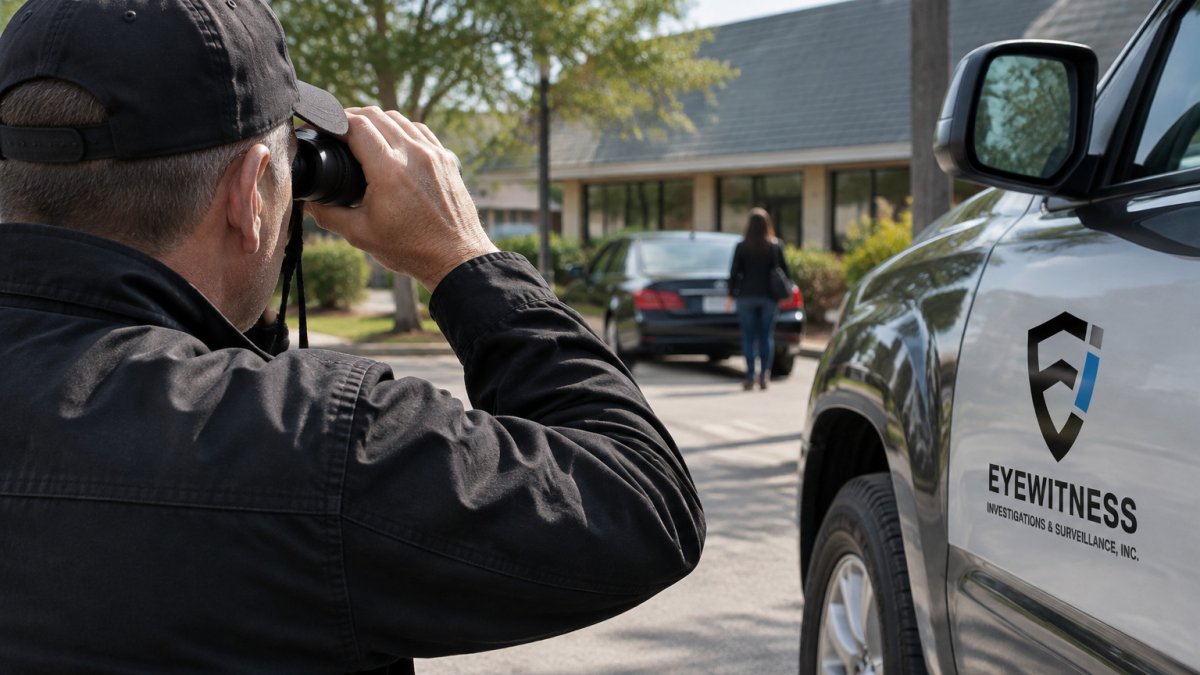
Surveillance is often the most expensive part of a workplace injury investigation cost because it requires sustained observation over hours or days.
A single day of surveillance typically costs $400 to $1,000 depending on location and number of investigators. Multi-day operations run higher due to coordinated schedules and larger teams.
Here's what drives surveillance costs:
Duration: A 4-hour observation costs less than 8-hour or 24-hour surveillance
Number of investigators: Solo surveillance is cheaper than team-based operations
Equipment: GPS tracking, drone footage, or thermal imaging adds cost
Travel distance: Surveillance in remote areas costs more due to mileage and time
Complexity: Monitoring multiple locations or following a subject between sites increases cost
Workers' compensation cases often require targeted surveillance, observing claimants during specific activities, returning to work, or doing tasks they claim they can't.
Focused surveillance is more cost-effective than open-ended monitoring. The more specific you are about what to observe and when, the lower your costs.
Insurance Claim Investigation Costs and Fee Models
Carriers, third-party administrators, and defense counsel typically engage investigators under hourly billing, flat fees, or hybrid arrangements.
Hourly billing offers flexibility when scope is uncertain.
Flat-fee investigations commonly range from $1,500 to $3,400 for a complete injury claim investigation including scene documentation, witness interviews, medical record review, and a written report.
Hybrid models combine a retainer with hourly billing beyond an initial scope, for example, a $500 to $2,400 retainer covering preliminary work, then hourly rates.
Fee Model | Best For | Typical Cost Range | Predictability |
Hourly | Complex cases with uncertain scope | $50-$150/hour | Low |
Flat Fee | Straightforward injury investigations | $1,500-$3,400 | High |
Retainer | Ongoing or urgent cases | $500-$2,400 initial | Medium |
Daily Rate | Multi-day surveillance | $400-$1,200/day | Medium |
Itemized Sample Budgets for Common Workplace Injury Scenarios
These planning ranges, not quotes, show realistic scenarios you can map to your own claim.
Scenario 1: Short surveillance assignment (1-2 days). A claimant alleging a back injury is observed for two consecutive days during claimed work hours.
Investigator labor: 16 hours at $75-$125/hour = $1,200-$2,000
Mileage and travel: $50-$150
Report preparation: 2-3 hours at $50-$100/hour = $100-$300
Estimated total: $1,350-$2,450
Scenario 2: Multi-day investigation with scene documentation (3-5 days). A disputed fall claim requires scene inspection, witness canvassing, and several days of surveillance.
Surveillance labor: 32-40 hours at $75-$125/hour = $2,400-$5,000
Scene documentation and witness interviews: 6-10 hours at $75-$125/hour = $450-$1,250
Mileage and travel: $150-$400
Report preparation: 4-6 hours at $50-$100/hour = $200-$600
Estimated total: $3,200-$7,250
Scenario 3: Records and witness interview investigation (no surveillance). An employer or carrier needs to verify injury mechanics and prior claim history without field surveillance.
Records review and background research: 5-8 hours at $50-$100/hour = $250-$800
Witness interviews: 4-8 hours at $75-$125/hour = $300-$1,000
Report preparation: 3-5 hours at $50-$100/hour = $150-$500
Estimated total: $700-$2,300
Pro Tip Ask the investigator to break the estimate into labor, travel, and report preparation. A single blended number hides where costs can be controlled.
What Drives the Estimate Up or Down
Several variables move these ranges more than the hourly rate:
Surveillance duration and hit rate. Productive surveillance days cost the same as unproductive ones. A claimant who leaves home only briefly may require additional days to capture useful footage.
Number of investigators. Team-based surveillance for mobile subjects can double labor cost.
Travel distance. Remote locations add mileage and drive time, which is often billable.
Report complexity. A litigation-ready report with time-stamped observations, photographs, and a timeline takes longer to produce than a summary memo.
Rush timelines. Expedited turnaround may carry premium billing.
Cost Versus Claim Value
Proportionality matters. A $2,000 surveillance assignment may be reasonable on a claim with significant exposure and clear red flags, but hard to justify on a low-value claim. Ask what specific evidence would change the claim outcome and whether the scope is designed to capture it.
What You Receive for the Fee
Confirm deliverables in writing: a written report with a chronology of observations, time-stamped photographs or video, witness statements, and an evidence log. Ask whether raw footage is included, how long evidence is retained, and whether the investigator will provide a declaration or testimony, typically billed separately at hourly rates.
Hidden Expenses and How to Control Investigation Scope
Several costs can surprise you if not addressed before work begins.
Mileage and travel expenses add up fast.
Report preparation sometimes carries separate fees. A basic summary may be included in hourly rates.
Specialized services such as computer forensics, drone photography, or accident reconstruction are billed separately and can expand a budget significantly.
Waiting time during surveillance is sometimes billable. Clarify whether waiting time is included or billed separately.
Cancellation and rescheduling fees. Surveillance scheduled and then cancelled after an investigator is deployed may still bill for the deployed time.
What an Employer, Insurer, or Injured Worker Can Legally Investigate
Cost control starts with scope, and scope starts with what is legally permissible. This is general information, not legal advice; consult qualified counsel before authorizing any investigation.
Employers. An employer generally may investigate a workplace injury to administer workers' compensation and safety obligations, but must respect employee privacy and state law.
Insurers and third-party administrators. Carriers have a legitimate interest in verifying claims, but surveillance and recording are subject to state rules.
Watch Out Recording, surveillance, and workplace-access rules vary by state and by whether the matter is a workers' compensation claim, a personal injury lawsuit, or a regulatory proceeding. Confirm the applicable rules with counsel before authorizing recording or entry onto private property.
How to Evaluate Evidence and Investigative Deliverables
Documentation quality determines whether the investigation was worth its cost. Before hiring, ask what you'll receive:
Written report with a dated chronology of observations and a clear statement of what was and was not observed
Time-stamped photographs and video with metadata preserved
Witness statements signed and dated, with contact information
Evidence log identifying each item and its source
Chain-of-custody documentation if evidence may be used in litigation
Ask whether the investigator will provide a declaration or testimony and at what rate. Strong footage with a weak report may cost more if the evidence can't be authenticated.
Cost-Control and Scope-Setting Checklist
Define the specific question the investigation must answer
Set an authorization limit in dollars and hours before work begins
Require approval for expenses above an agreed threshold
Specify which locations and time windows matter and which do not
Request preliminary findings before authorizing expanded work
Confirm what is included in quoted rates versus billed separately
Confirm the cancellation and rescheduling policy
Ask for the deliverable format and retention period up front
Scope creep is the biggest cost driver: basic surveillance can expand into background checks, medical provider interviews, and expert analysis. Clear boundaries upfront keep the investigation proportional to the claim.
Starting Your Workplace Injury Investigation
Once you've decided to investigate, you need to know what to expect from the process and what to budget. Eyewitness Investigations provides insurance claims and litigation support investigations throughout Florida.
The first step is a free consultation where you explain the claim details, injury circumstances, and what you suspect.
During consultation, you should get a preliminary cost estimate. This estimate should cover:
Initial investigation scope (how many hours or days)
Expected surveillance duration
Any specialized services needed
Estimated total cost range
Timeline for results
If you're ready to move forward, Book Now to discuss your claim and get a detailed cost estimate.
Hourly rates matter, but investigation type, scope, and complexity matter more. Define your needs clearly, get multiple estimates, and set scope boundaries upfront to get solid evidence without budget surprises.
Frequently Asked Questions
How much does a private investigator charge per hour for workplace injury cases?
Private investigator hourly rates typically range from $50 to $150 per hour, depending on investigator experience, case complexity, and geographic location. Experienced investigators with specialized training in workers' compensation fraud may charge toward the higher end. Most firms require a minimum number of hours per engagement, often 5 to 10 hours, to ensure adequate investigation depth. Your specific rate depends on the investigation type and whether travel or specialized fieldwork is required.
What factors affect the total cost of a workplace injury investigation?
Investigation costs depend on case complexity, surveillance duration, travel distance, investigator experience level, and the investigation type (desk research versus active fieldwork). Workplace injury investigations involving surveillance typically cost more than document review alone. Geographic location, the number of investigators needed, and whether specialized services like computer forensics are required also influence pricing. A clear scope of work at the start helps control costs and prevents unexpected fees.
Can an employer or insurance carrier legally conduct workers' compensation surveillance?
Yes, employers and insurers can legally conduct workers' compensation surveillance in most circumstances, provided they follow state and federal privacy laws. Surveillance must occur in public spaces or areas where the claimant has no reasonable expectation of privacy. Recording audio conversations without consent is illegal in many states. Working with a licensed private investigator ensures compliance with applicable laws and helps ensure evidence is admissible. Always consult legal counsel before authorizing surveillance to confirm compliance with your state's regulations.
What should I expect to receive after hiring a private investigator for a workplace injury case?
You should receive a detailed written report documenting findings, observations, dates, times, and locations. The report may include photographs, video evidence, or statements supporting or refuting the injury claim. Evidence quality and admissibility depend on proper investigation methodology and adherence to legal standards. Before hiring, discuss what deliverables you need and whether the evidence will support your specific legal or claims objective. A reputable investigator will explain how their findings can be used in settlement negotiations, litigation, or claim denial decisions.
Book Now
Add theeyewitness.com as a preferred source on Google →
Comments